5 Things You Need to Know About Thyroid Cancer
Most people know little about their thyroid, if they’re aware of it at all, and are clueless about the many health problems that can affect it. Thanks to celebrities such as Robert Ebert (who died in 2013 after a long bout with salivary and thyroid cancer) and Sophia Vergara, thyroid cancer is experiencing a sudden surge in popularity. What does this mean for you? Well, here are a few tidbits that are important and, even if they don’t affect you, they will at least keep you in the conversation if one of your peers brings it up.

1 – Thyroid cancer is on the rise. In fact, the likelihood of getting diagnosed with thyroid cancer has increased by 274% since 1997. However, diagnosis doesn’t equal incidence. More likely, it’s due to the fact that people are becoming cognizant of its existence that it is being found. The American Cancer Society says it’s a rare disease, in fact around 60,000 people in the US will be diagnosed with thyroid cancer in 2014, and around 2,000 of those will be terminal. Those greatest at-risk? Young women around child-bearing age — although it can affect men, women, and children of all ages. And, even though it’s rare, it’s not in the spotlight like other cancers and the exposure it DOES get often will bypass discussing some of the real issues that go along with this cancer.
Those who develop this kind of cancer don’t typically have a familial history of it. This could be because this is a fairly “new” kind of cancer that we’re just starting to get a bead on and thus, there hasn’t been an opportunity for there to be a familial history.
2 – It’s not a “good cancer.” Don’t listen to people who say that, not even doctors. They seem to have a script in their office that says, “if you’re going to get a cancer, this is the one to get.” This is one of the most misleading comments we’ve heard. Yes, thyroid cancer has a high survival rate and, if caught early, those with the most common types have a five-year survival rate of 100%. That being said, it’s never lucky to have cancer. Period.
3 – Treating this type of cancer usually involves removing the entire thyroid, which is an organ that produces vital hormones our bodies need to function. Due to this procedure, thyroid cancer survivors require medication (typically a daily pill) to replace these hormones. This requires a lot of trial and error to get these levels where they need to be and working well. It’s not just a pill, it’s constant monitoring and blood tests.
Also, those who get this cancer are at risk for the cancer to spread to the lymph nodes, which often have recurrences and necessitate more surgery.
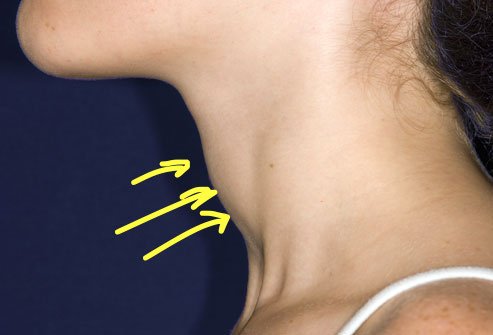
4 – Regular self-exams aren’t really plausible because the thyroid gland is typically difficult to feel. However, some thyroid cancers are found incidentally when someone notices a bump on their neck. Some cases have been found when a nodule is pushing on the windpipe, causing problems with swallowing. Sometimes, people feel increased pressure on their neck as if someone was pushing on it or choking them. Other symptoms include having an unusually hoarse voice (the thyroid sits just below the larynx, and can cause voice changes if it enlarges), neck pain that lasts longer than a couple of weeks, swollen lymph nodes, and throat pain that is unrelated to an illness or viral infection that persists longer than a week or two. Yet it should be noted that most symptoms are subtle or virtually nonexistent, so there isn’t really a list of symptoms to check off. Most cases that are discovered are found incidentally.
If you experience difficulty swallowing or notice lumps on your neck, don’t be afraid to contact your primary care physician. Yes, this cancer is rare but that doesn’t mean it’s nonexistent. It’s better to know for sure than to have the thought niggling at the back of your mind.