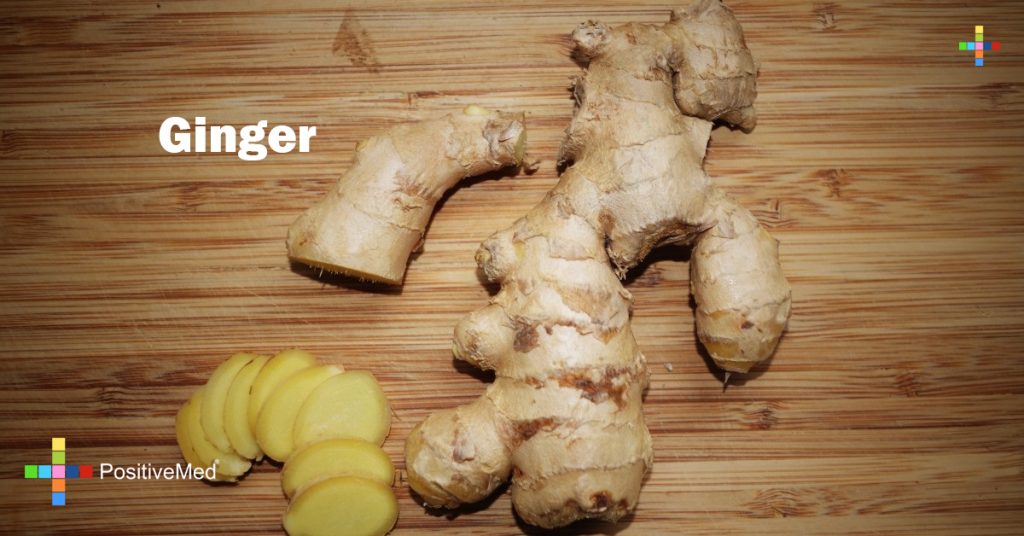
This amazing root is native to India, where the ancient Ayurveda’s used it to preserve food, as a digestive aid, and as a spiritual and physical cleanser, it would be consumed in order to be sweet-smelling and purified for the gods. The Greeks wrapped the root in a piece of bread and ate it after a heavy metal to prevent indigestion, that is the origin of gingerbread.

Ginger is a pungent, sweet herb with warming/drying qualities, it also acts as a stimulant, diaphoretic, antidepressant, and expectorant. Ginger stimulates all tissues of the body, and is highly recommended in cases when illness is due to poor assimilation.
 This ancestral root is recommended for colds, coughs, flu, indigestion, vomiting, belching, abdominal pains, motion sickness, laryngitis, arthritis, hemorrhoids, headaches, impotence, diarrhea, heart diseases and memory loss, and it can be taken as food or tea, a gargle and a compress, and also as a massage oil.
Ginger also gives baked goods, smoothies and fruit a fresh, slightly pungent taste.