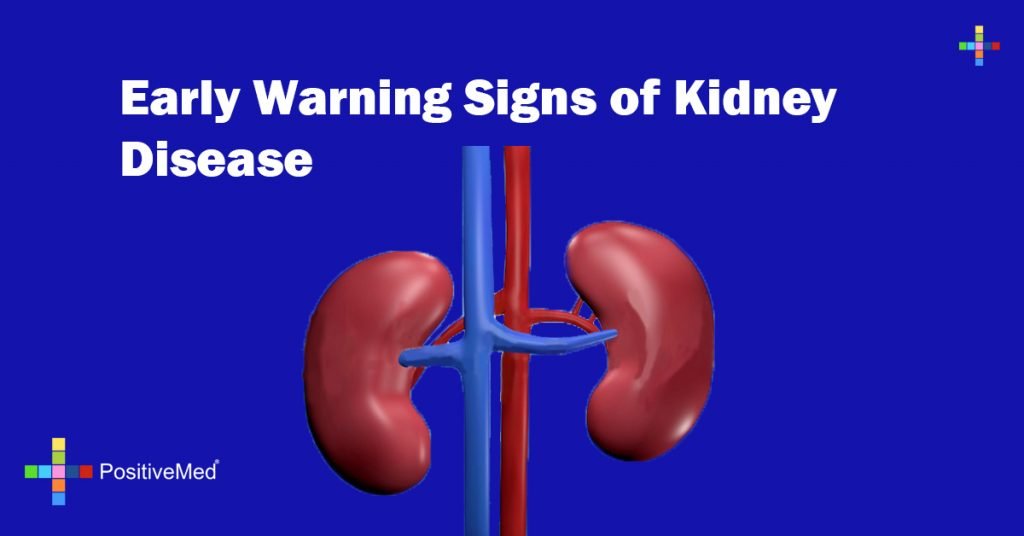
Early Warning Signs of Kidney Disease
Even though kidney disease affects millions of Americans, there are only a few signs or symptoms that can indicate a problem. The Kidney disease is often called a “SILENT DISEASE” as most people do not feel any different until the disease is very advanced. Also, many people don’t recognize the early warning signs or ignore them completely. Recognition and awareness of the warning signs can mean the difference between early detection and treatment or kidney failure which becomes dialysis, a transplant, or even death.
The important job of regulating the body’s potassium, salt, and acid content is performed by the kidneys. Kidneys are also in charge of removing waste products from the body, balancing the body’s fluids, and producing active vitamin D to promote healthy bones. They also produce hormones that affect the function of other organs such as stimulating red blood cell production. Other hormones produced by the kidneys regulate blood pressure and control the metabolization of calcium.
The first, and most obvious, symptom is a change in urination or urination habits. Kidney function is responsible for urine production. Thus, any abnormalities such as urinating less or more often; a decrease in the amount of urine; having oddly-colored, cloudy, foamy, or bloody urine; even pain or burning can be a big indicator that something is amiss.
Protein or blood in the urine would probably only be detected during an annual physical, preoperative evaluation, or any other kind of physical that involves a urine test. Many kinds of kidney damage result in leaking of the glomerular fibers (which filter the blood for impurities), resulting in red blood cells and protein being leaked into the urine.
Somewhat oddly, lower back pain can also be an indicator of kidney disease. Kidney pain is felt in the back, sometimes on the sides, usually just below the rib cage.
Other symptoms that may seem unrelated are a loss in appetite or a change in how food tastes, dizziness or difficulty thinking clearly, headache, severe itchiness not related to a bug bite or rash, metallic taste in the mouth, or even fatigue. As the kidneys also help make red blood cells, which carry oxygen around the body, a decrease in those cells causes anemia. Anemia causes tiredness, the aforementioned dizziness and thinking difficulty, as well as decreased stamina and, sometimes, memory problems.
There can also be symptoms that are similar to that of a UTI (urinary tract infection) and though UTIS don’t typically cause permanent or progressive kidney damage if treated promptly, if left untreated it can cause a whole slew of problems.