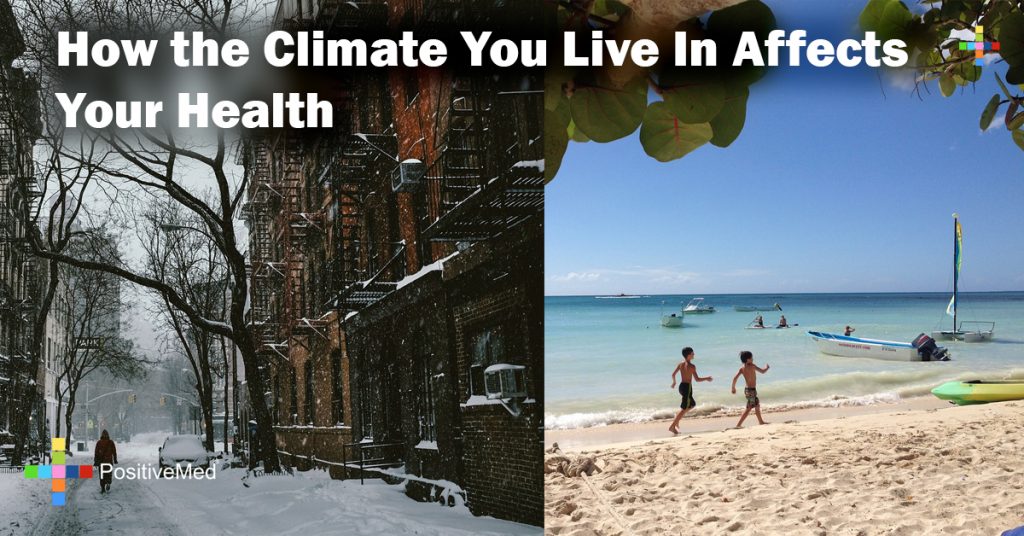
How the Climate You Live In Affects Your Health
People have always been affected by temperature variations, changes in light and altitude factors. Today, new research is finding that climate has a strong effect on physical condition and can even contribute to higher death rates. This understanding of the climate’s effect on health can help find the best environmental conditions to maintain the best physical condition.

Cold Climates
Although people believe that hot weather can be the cause of death, a recent study published in the International Journal of Biometeorology states that higher mortality rates are linked to cold temperatures. The deaths are usually related to cardiovascular problems and respiratory-related diseases and may be linked to vascular contraction that occurs in cold weather. Snow-shoveling and other strenuous activities required in cold climates have a strong link to these issues. In addition, residents in cold climates may also face seasonal affective disorder, a depressive condition that occurs from lack of adequate sunlight. Depression can also have an effect on general health.
Hot Climates
Generally, populations who live in hot climates tend to restrict their activities during the hottest part of the day and have a cultural habit of the midday rest period. Those who have newly-arrived in these areas may be at particular risk for heat-related health problems because they have not learned to pace their activities to the local climate. These new arrivals must learn to eat differently, drink more fluids to maintain proper hydration and avoid physical exertion during the highest temperatures of the day
Sea Level
Living at sea level does not entail becoming adjusted to the thinner air at higher elevations. Inhabitants of areas at sea level do not have to be concerned about greater exertion maneuvering on the inclined planes of the landscape As a result, living at sea level can be the most beneficial for people with heart and lung problems. However, living at sea level has its own issues. Storms, hurricanes and flooding can cause increased stress that can affect health.
Mountain Level
Scientists at the Altitude Research Center in Aurora, Colorado have found that subjects kept in a high-altitude chamber will lose weight even though they are allowed to eat what they want. Obesity is linked to a variety of health issues, including diabetes, heart disease and lung disorder, so better weight management at high altitudes could be a significant aid in reducing the incidence of these diseases.
Tropical Level
Populations that live at tropical levels can be affected by a variety of health issues, including allergies to substances in the environment, asthma, heat exhaustion, heat-related heart problems, lung problems associated with high humidity and a variety of pathogens that thrive in tropical conditions. The young and the old may be particularly affected by these conditions.