Check If You’re One Of 10 People Who Can See What’s Hiding In THIS Picture
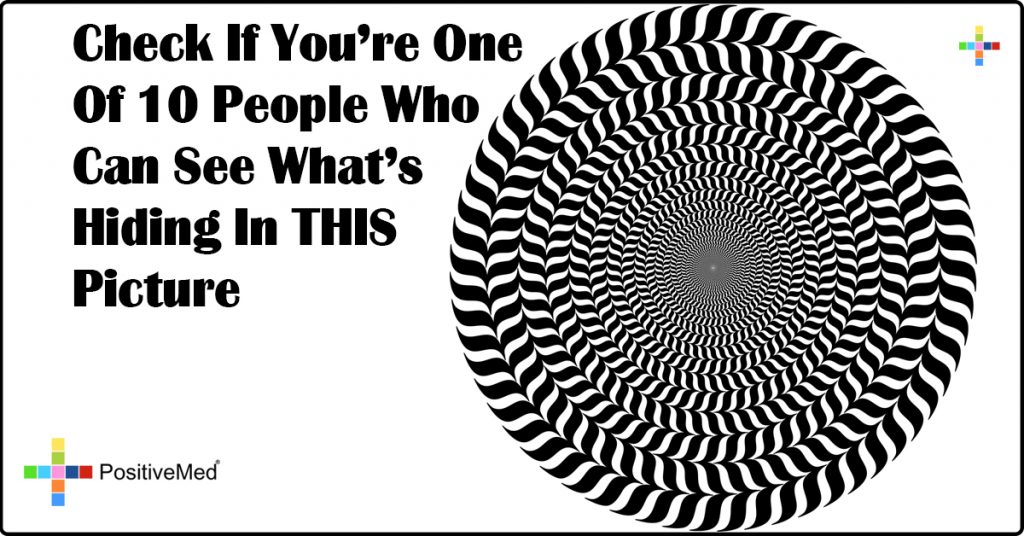
This mysterious illusion only shows its secret to one out of every ten people who look at the picture. Not only is the real meaning in the picture hidden, it is also an important message about a constantly decreasing number in a certain animal’s population. Can you see the image that is invisible to most people?

Optical illusions have been one of the mankind’s favorite types of mind-bending tricks since the 5th century B.C. when a Greek philosopher named Epicharmus explained and showed some of these puzzling images. Epicharmus and another Greek philosopher, Protagoras, contended in their theories of how these illusions worked. Protagoras proposed that the environment fooled the mind while Epicharmus said that sensory organs tricked the brain and presented the mind with optical illusions.
Eventually one of the most famous philosophers of all time, Aristotle, tried to mesh the opposing theories with a definitive answer. Aristotle stated that Protagoras was correct in that senses were necessary, but that Epicharmus was right in that the senses could be fooled extremely easily. Although Aristotle provided a convincing theory, the debate on optical illusions continued long after his death.
RELATED ARTICLE: Here Is What You First Noticed On This Picture Reveals About Your Future
Psychologists such as Johannes Mueller performed studies on perception and the rise of Op Art—a type of abstract image painting that involved hidden imagery, flashing, painted vibrations, and other techniques—brought new fascination to the public in optical illusions. With the rise of newspapers and art, illustrators like W.E. Hill with his famous Young Girl-Old Woman illusion popularized optical illusions to the masses.
This illusion harkens to the illusions in Op Art, where an image is hidden inside the presented picture. Try looking up and down the picture, scanning vertically through the lines. You will see an interesting effect, where the picture will seem to shift horizontally. However, this is not what is really in the picture—the real image is hidden behind the shifting lines. Try stepping back from the image and scanning the image in a circular fashion. Within a small period of time, you may be able to see the majestic animal hiding in the bolded lines. If not, take a break from looking at the image for at least fifteen minutes before looking at the picture once more.
The fascination with optical illusions is something that will be ever-present, and this illustration is just another example of amazing hidden imagery. The panda hidden inside the image is a reminder of a splendid animal that is creeping closer to extinction, and that humankind should be aware of the need to protect this species.