THIS May Save Your Life: The Difference Between A Heart Attack, Stroke And Cardiac Arrest
Although rare, there may come a time in your life when you experience a life-threatening event. The more you know about what is happening to your body the better chance you have of saving yourself and knowing when to put yourself into the hands of a medical team. This article defines three major life threatening events, gives you their symptoms and suggests what to do in each situation. According to research, “Cardiovascular disease is the leading global cause of death, accounting for 17.3 million deaths per year, a number that is expected to grow to more than 23.6 million by 2030.” Death by a stroke is also high on the list of leading causes of death. With a little knowledge, you can greatly increase your chances of survival.
Definitions
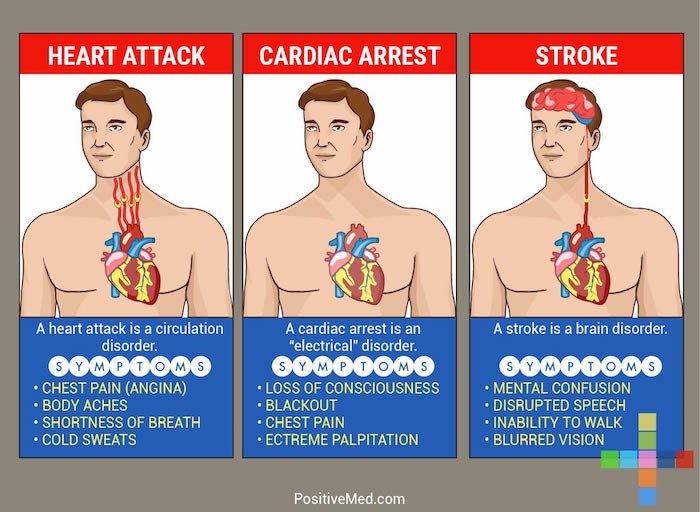
Heart attack: a heart attack is an abrupt and sometimes fatal incidence of coronary thrombosis, the formation of a blood clot inside a blood vessel of the heart that restricts blood flow, typically resulting in the death of part of a heart muscle.
Stroke
: a stroke happens when the blood supply to part of your brain is interrupted or severely reduced, which deprives the brain tissue of essential oxygen and nutrients. Within minutes, brain cells begin to die.
Cardiac arrest
: cardiac arrest is a sudden cessation of the function of the heart. Unlike a heart attack, cardiac arrest involves the whole heart.
Symptoms and First Aid
Heart Attack
According to the Harvard Health Publications of Harvard Medical School, symptoms of a heart attack may include:
Pain, burning sensation, tightening and/or pressure in the chest
Hot flash or a cold sweat
Dizziness
Sudden weakness or pain in one or both of the arms
Shortness of breath
Nausea or vomiting
RELATED ARTICLE: 4 Bodily Signs A Heart Attack Is Near
When it comes to first aid, Harvard Health Publications advise that if you experience one or more of the above symptoms call 911. An emergency medical technician will rush you to a hospital in an ambulance full of life-saving equipment that can keep you stable if your heart is in trouble.
Stroke
Symptoms may include:
Trouble walking
Trouble with speech
Difficulty understanding
Vision trouble
Sudden, severe headache
Paralysis or a numb feeling in the legs, arms or face, especially on one side of the body.
Vomiting
The Mayo Clinic instructs that you seek immediate medical attention if you notice any symptoms of a stroke. They also say to utilize the acronym “FAST” and do the following:
Arms: when you raise both of your arms, do both arms rise up or do one struggle?
Speech: when you try to talk, is your speech slurred or strange?
Time: “If you observe any of these signs, call 911 immediately.”
Cardiac Arrest
Usually, there are no signs of cardiac arrest. However, according to the Mayo Clinic, some symptoms may precede cardiac arrests, such as fainting, blackouts, chest pain, shortness of breath, weakness, dizziness, heart palpitations or vomiting.
RELATED ARTICLE: Understanding Coronary Heart Disease
If you experience any of the above symptoms, call 911 immediately. Preforming CPR or using a defibrillator is the only way to keep the heart pumping blood to crucial organs of the body.
A heart attack, stroke or cardiac arrest can be deadly, but there are symptoms that can precede them, and with a little knowledge of what the symptoms are and confidence in yourself, you can know when it is time to be safe, not sorry.
In conclusion, heart attack, stroke and cardiac arrest may be top killers, but with advances in medical technology and knowledge, you lower their ability to make you a statistic.