Will Your New Baby Look Like You? A Helpful How-to Guide
The moment you find out you are expecting a child, what is the first thing you think about? If you are like many parents, you probably find yourself ruminating about your unborn baby’s gender, personality and looks. And you probably spend a lot of time wondering if he or she will look like you!
As luck and science would have it, today it is actually possible to make a highly educated guess about the latter. If you want to know (or at least intelligently guess at) eye and hair color, height, weight, shape, dominant hand and other features, science is your new BFF.
Strong Gene Predictors
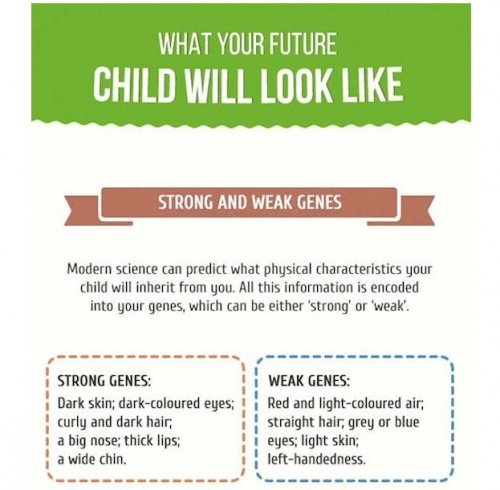
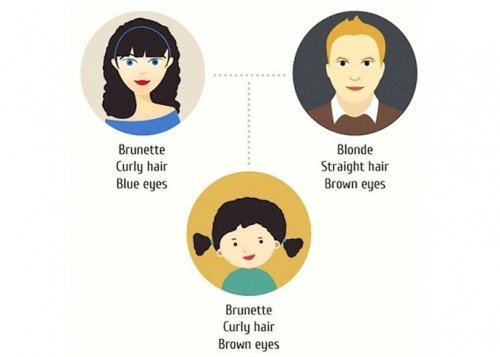
For example, certain genes tend to be stronger (often termed “dominant”) in the running for determining what a child will look like. The way this works is simple: if you contribute one set of genes (say, for dark hair) and your partner contributes one set of genes (say, for light hair), your dark hair genes are “dominant” and will likely win out to produce a dark haired child.
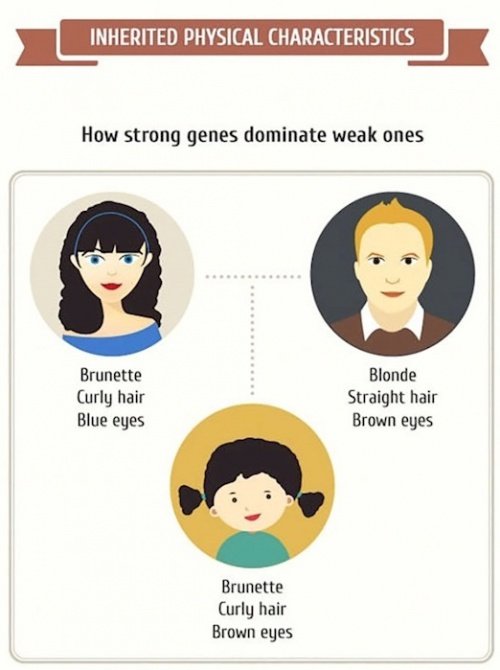
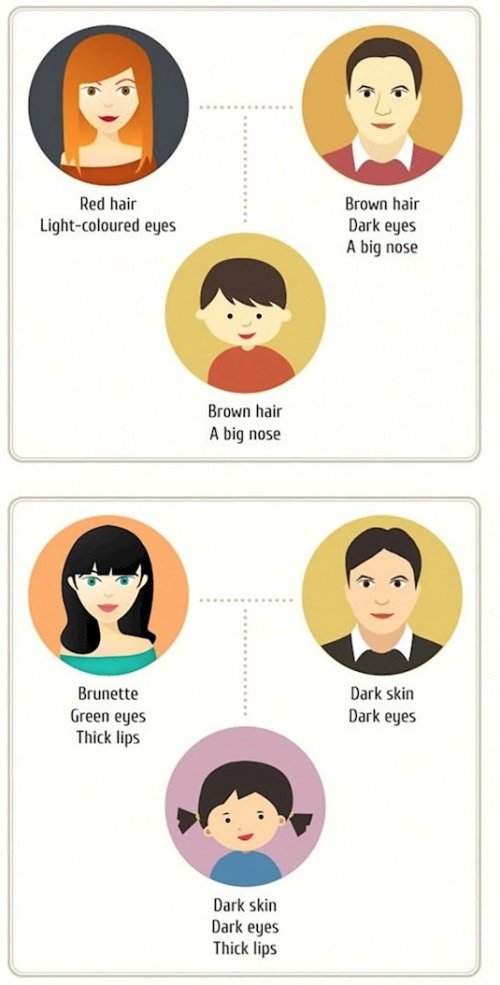
– Strong (dominant) genes: dark hair, curly hair, dark eyes, dark skin, wide chin, big nose, thick lips, right-handed.
– Weak (recessive) genes: light (and red) hair, straight hair, light eyes, light skin, narrow chin, narrow nose, thin lips, left-handed.
RELATED ARTICLE: Overweight? Maybe You Really Can Blame Your Genes
How Genes Combine to Create a Child’s Appearance
Of course, there are a million different permutations of the gene predictors listed here. For instance, if you and your partner both have the same eye color, it is quite likely (up to 99 percent likely) that your child will also share that same eye color.

There are also some fun (yet scientifically-based) online quizzes that can help you work out who has the most dominant genes and make your own guess about who your baby will favor.
When Your Predictions Don’t Pan Out
If you use basic science to make a prediction about your unborn baby’s looks and he or she pops out looking different, it doesn’t mean the science is wrong. Rather, this difference reflects the presence of heritable genes from grandparents or even great grandparents. Genes can skip one or more generations with ease and then show up unexpectedly in the least likely places – like on your child’s face!
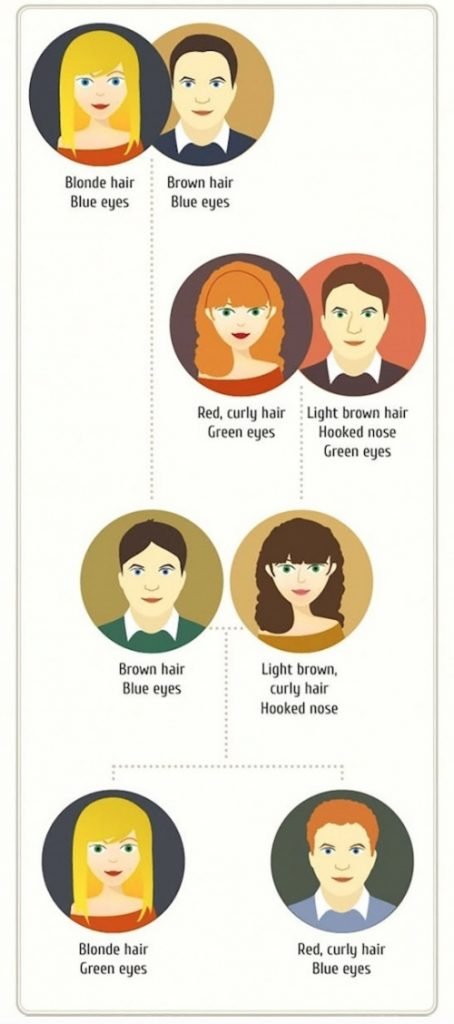
Ultimately, this means that discovering what your baby looks like – and who she or he looks like – will just be another exciting part of the journey you are now on!