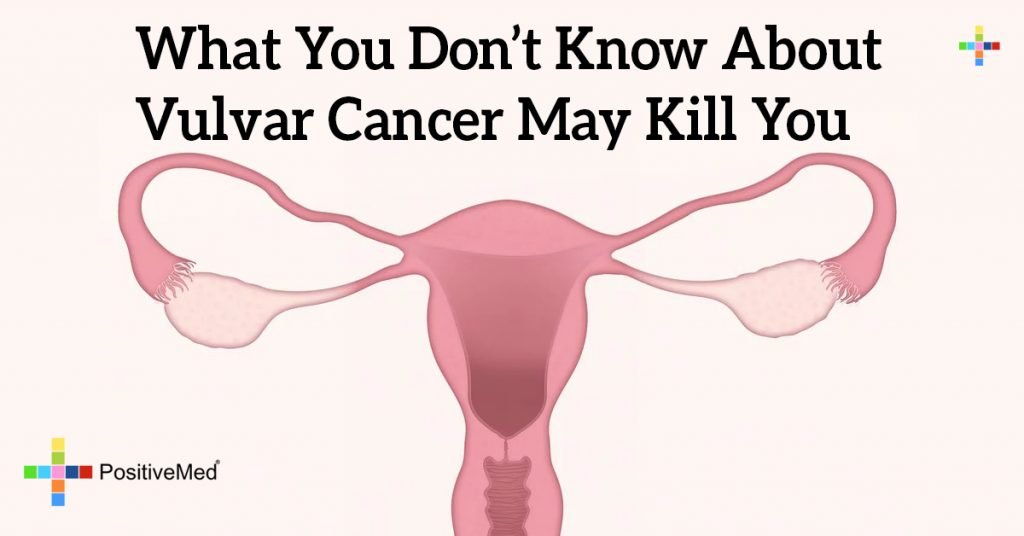
Vulvar cancer is a type of cancer that occurs on the outer surface area of the female genitalia. If you’re uncomfortable with discussing genitalia, you should backspace now before it’s too late and we say something that offends you.

Now, the vulva is the external parts of female genitalia, which includes:
The honey pot opening (also known as the birth canal); the honey pot is part of the reproductive system and extends from the uterus to the outside of the body.
The outer folds around the honey pot opening (working from the outside in, are the labia majora and the labia minora)
During a honey pot examination, it’s also possible to see the urethra, an opening that leads to the bladder, and the anus, the opening that leads to the colon.
Vulvar cancer is a type of cancer that occurs in those external parts of the genitalia. Vulvar cancer usually presents as a lump or sore on the vulvar area that causes itching that doesn’t go away. While this type of cancer can occur at any age, it’s most commonly diagnosed in older people. Treatment of this kind of cancer typically involves removing the infected tissues as well as some healthy surrounding tissue. Sometimes, the surgery requires removing the entire vulva. As with every cancer, the earlier it’s diagnosed the less extensive the surgery would be.
Other symptoms include:
Vulvar skin changes such as color changes or growths, sometimes with the appearance of an ulcer or wart
Thickening of the skin around the vulva
Bleeding that’s unrelated to periods (menstruation)
Vulvar tenderness or high sensitivity
Vulvar pain
An open sore on the vulva, particularly if it lasts for a month or more
As you can see, certain signs and symptoms that are indicative of vulvar cancer can be symptoms of conditions that aren’t cancer. The only way to be sure of a vulvar cancer diagnosis is to do a biopsy. A small piece of tissue from the suspicious area is removed and examined under a microscope. A doctor that specializes in diagnosing diseases via laboratory tests (a pathologist) will examine the sample to determine whether or not if cancer or a pre-cancerous condition is present.
Risk factors for vulvar cancer include having human papillomavirus (HPV) infection, having a history of genital warts or herpes, having intraepithelial neoplasia (VIN). While having a risk factor of a diseases increases one’s risk for infection, that isn’t a guarantee you’ll get cancer and neither does having no risk factors guarantee that you won’t get cancer. Talk with your doctor if you’re concerned about your risk.