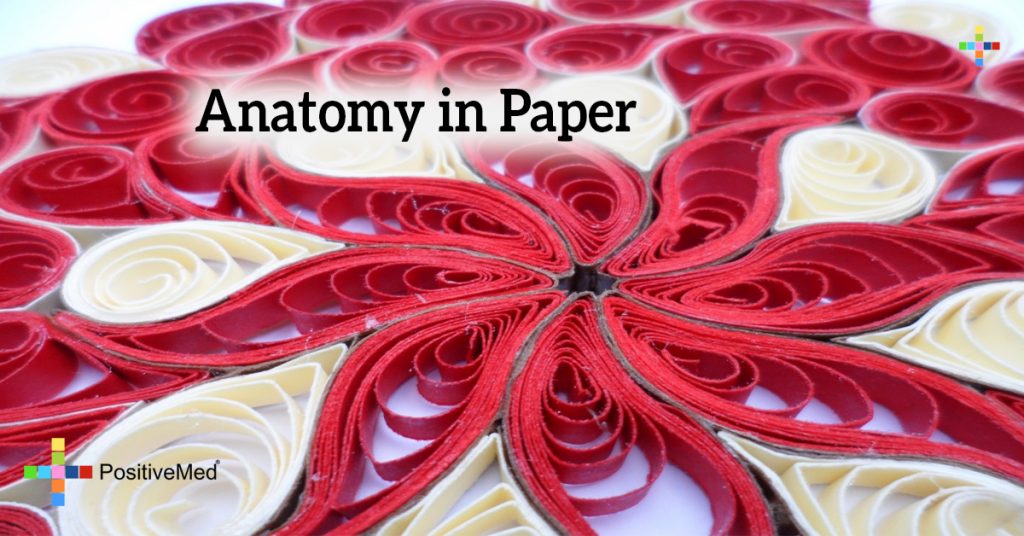
These are not colored CT scans nor MRIs. Artist Lisa Nilsson created these beautiful anatomical cross sections using rolled colored pieces of paper. Each artwork took several week and you can find very detailed construction of the anatomy of the muscles, organs and blood vessels of human body. As artist describes in her website:
These pieces are made of Japanese mulberry paper and the gilded edges of old books. They are constructed by a technique of rolling and shaping narrow strips of paper called quilling or paper filigree. Quilling was first practiced by Renaissance nuns and monks who are said to have made artistic use of the gilded edges of worn out bibles, and later by 18th century ladies who made artistic use of lots of free time. I find quilling exquisitely satisfying for rendering the densely squished and lovely internal landscape of the human body in cross section.
[tribulant_slideshow gallery_id=”2″]
Lisa is born in Massachusetts, USA in 1963 and graduated from Rhode Island School of Design in 1985. She had a TED talk in Washington DC in 2012 and she shared more details about her artwork and her inspiration during her talk. You can watch this short video here: