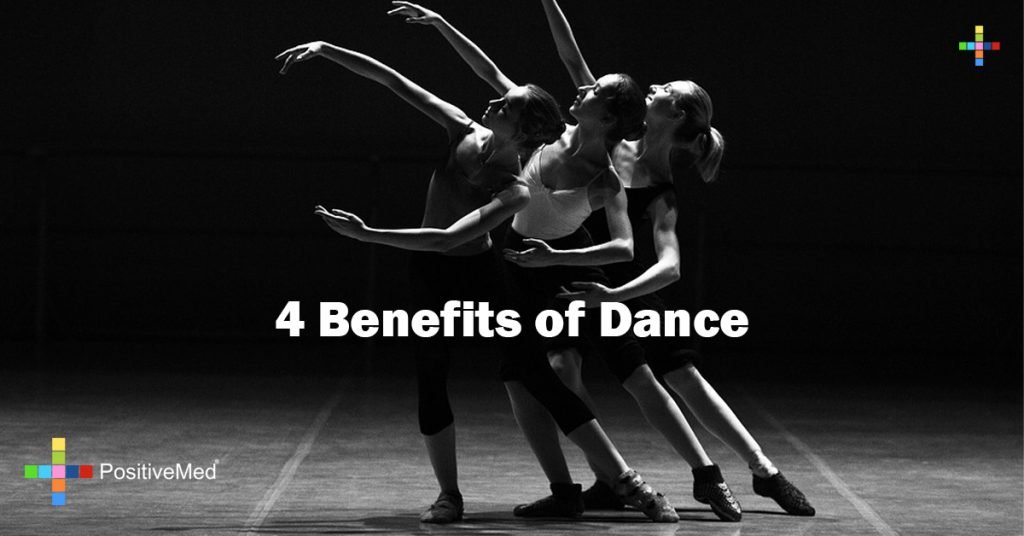
Dancing in one of the best exercises you can do, for your body and soul. Its the perfect way for people of all ages to stay in shape, and its much more fun than running on a machine! We give you 4 benefits about dance:

- Flexibility
Dancing requires a great amount of flexibility, an important part of being healthy.
Dancers must strive to achieve full range of motion for all the major muscle groups. The greater the range of motion, the more muscles can flex and extend. Bending and stretching are the most required moves to perform while dancing.
- Strength
Strength is defined as the ability of a muscle to exert a force against resistance, which is built in dancing by forcing the muscles to resist against a dancer’s own body weight.
Many styles of dance require jumping and leaping high into the air, which require tremendous strength of the major leg muscles.

- Endurance
Dance is physical exercise, therefore it increases endurance, which is the ability of muscles to work hard for increasingly longer periods of time without fatigue.
- Sense of Well-Being
Dancing is a social activity and it has been known that strong social ties and socializing with friends contribute to high self-esteem and a positive outlook.