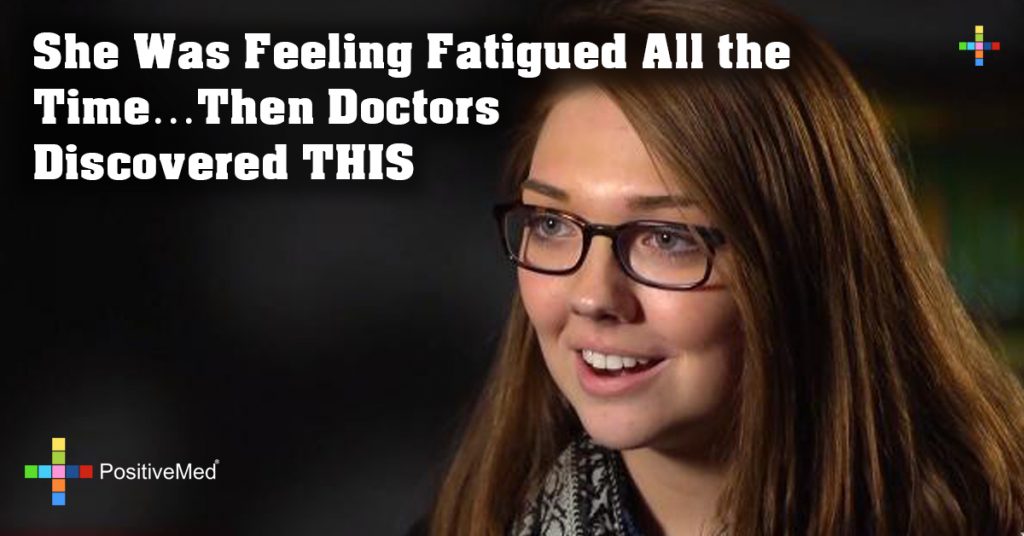
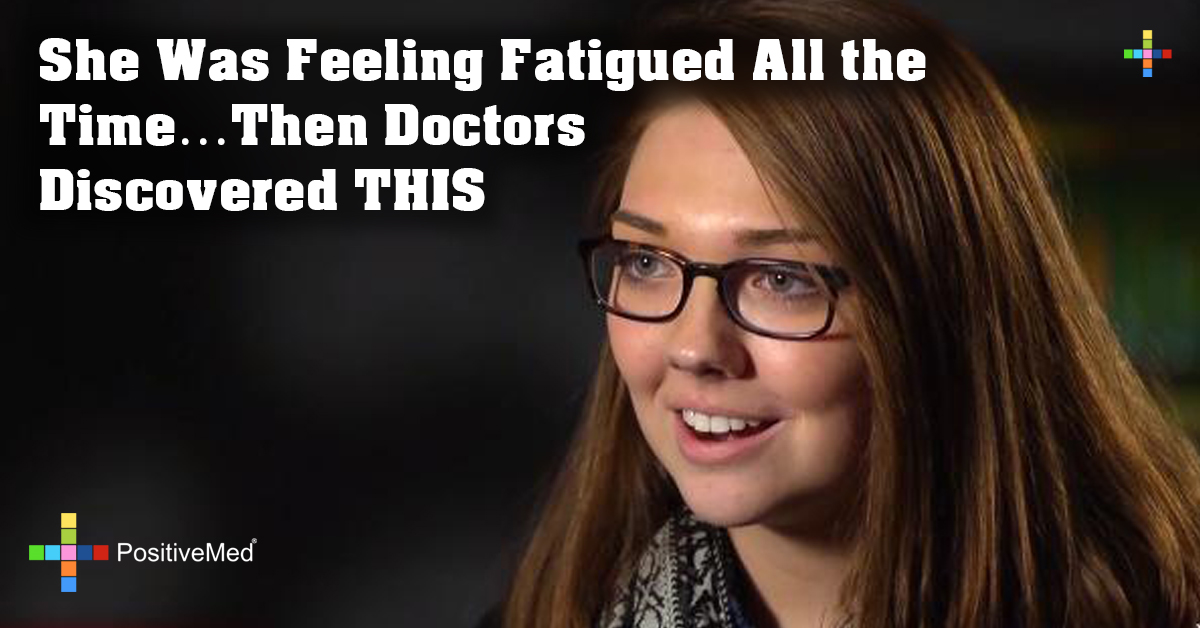
She Was Feeling Fatigued All the Time…Then Doctors Discovered THIS
[nextpage title=”…”]
When Katie Luckraft was 12, she began to feeling fatigued that would leave her incapacitated. Her blood pressure was unstable, her heart rate would dangerously increase when standing and she would even experience fainting spells. Doctors told her that her problem was hormonal and related to the onset of puberty. Some even told her mother that she needed to see a psychiatrist. It was not until her mother took her to a cardiologist that she was diagnosed with dysautonomia, or more specifically, Postural Orthostatic Tachycardia Syndrome (POTS).
Dysautonomia is a condition where the body’s autonomic functions, such as temperature regulation and blood pressure, fail. In Katie’s case, her blood pressure and heart rate rapidly increase when she changes positions too quickly. POTS is diagnosed in children and teenagers like Katie, when there is a 40 beats per minute (bpm)increase in heart rate.

In adults, POTS is diagnosed when the heart rate increases more than 30 bpm or over 120 bpm, within the first 10 minutes of standing. Women are 80 percent more likely than men to be affected, and usually develop POTS between the ages of 15 and 50. There is no cure, and despite the fact that POTS occurs in 1 out of 100 teenagers and in 3 million adults, it is often misdiagnosed as “hormonal problems” or “depression.”
Too often serious medical conditions that primarily impact women are disregarded. Doctors attribute these complex conditions to anxiety or depression, or relate the patient’s symptoms to premenstrual syndrome or menopause. POTS was only clinically defined by the Mayo Clinic in 1993 by the Mayo Clinic, and many doctors may be unaware of its existence or are not trained in how to make an accurate diagnosis.
Reasons for the common misdiagnosis of POTS may legitimately have more to do with the complex array of signs and symptoms, as opposed to unsympathetic or incompetent physicians. Many patients like Katie, present with an abnormal heart rate increase when standing. Most of them feeling fatigued all the time.
RELATED ARTICLE: Why Doctors Confused Her Uterine Cancer With Menopause
[/nextpage] [nextpage title=”…”]
Conversely, POTS patients may experience a decrease or even no change in blood pressure when standing. Blood tests usually reveal low blood volume and high levels of plasma norepinephrine when standing. And about half of POTS patients experience a condition called small fiber neuropathy that causes sensations as “pin and needles,” tingling, and numbness.
POTS patients often experience extreme fatigue, heart palpitations, headaches and lightheadedness. They can present with nausea, intolerance to physical exertion or exercise, shaking, fainting, cold or pain sensations in arms and legs, chest pain and shortness of breath. POTS patients can develop a reddish or purple discoloration in their legs when they stand, due to blood pulling or poor circulation. The discoloration usually vanishes when the patients returned to a reclined position.
While Katie’s condition relegates her to not being able to work and a wheel chair, many POTS patients experience mild symptoms and can have normal work, school and recreational activities. Like Katie, 25 percent of POTS patients are unable to work and are considered to be disabled. Some patients may even have difficulty with lifestyle activities such as bathing, eating or sitting upright because they feeling fatigued.
Each patient with POTS is different, and treatments vary depending on the severity. Katie treats her POTS by making sure her body has enough salt, drinking plenty of fluids and wearing compression socks. Many are like Katie and consume the recommended two to three liters of fluid per day and consume between 3,000 mg to 10,000 mg of salt.
Other treatments may include raising the head of the bed to conserve blood volume, reclined exercises such as rowing and recumbent bicycling and eating a healthy diet. Some POTS patients have to take medications such as Fludrocortisone, Beta Blockers, Midodrine, Clonidine, Pyridostigmine, Benzodiazepines, SSRIs, SNRIs, Erythropoietin and Octreotide.
Katie seems like she has be best idea for an effective treatment… A positive attitude. She does what she can to improve her condition, while appreciating her friends and family. Katie is able to share her struggles and help other people who are silently suffering from this, or other misdiagnosed conditions.
[/nextpage]