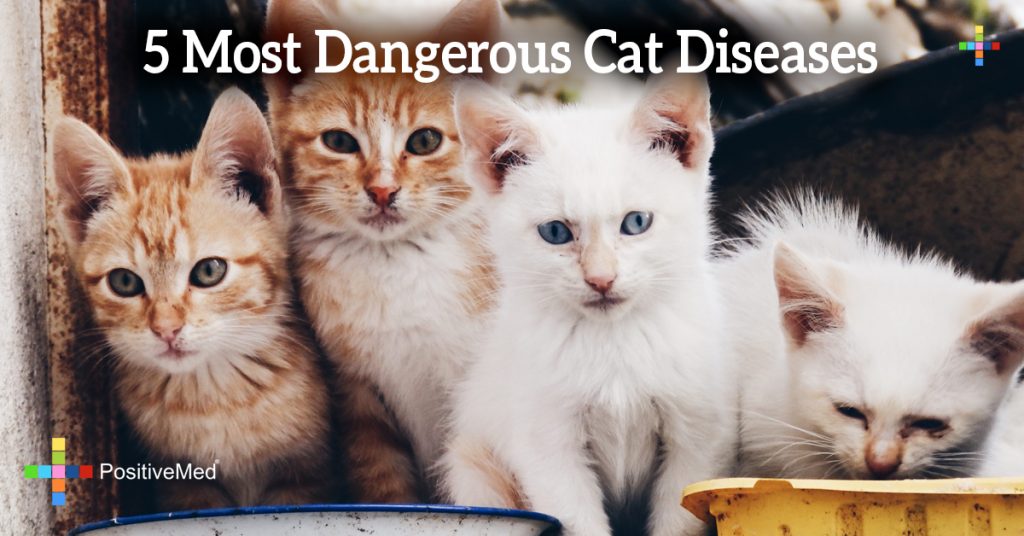
5 Most Dangerous Cat Diseases
You can easily prevent cat diseases but curing them is much harder. The Humane Society of the United States says 700 million stray and feral cats roam the streets, often carrying dangerous diseases. It’s important to protect your cat from dangerous diseases of stray cats by keeping them indoors, this lessens the chance of your cat indulging in fights with other street cats and of spreading disease through wounds and contact. Cats that live in multi-cat homes are more prone to risk of diseases. Protect your cat from fleas, ticks, and other infection-spreading parasites. Some diseases are easily curable, but if once your cat contracts an illness they are difficult to treat. Here are the 5 most dangerous cat diseases:
- Feline Rabies
Per the Merck Veterinary Manual, cats are reported rabid more often than any other pets in the United States. Feline rabies is one of the most dangerous diseases as it not only affects cats but it can be spread to humans. It usually spreads to cats when they are bitten by other wild animals. With indoor cats it’s spread by bats and rodents that enter your home. This disease affects the nervous system of cats.
The disease can be deceptively slow-moving in some cases, a normal incubation period is around 10 days. In rare cases the disease will affect the cat for weeks or even years. Common symptoms are yowling, drooling, poor coordination, conjunctivitis, fever, strange behavior, weight loss, and depression.

It’s incurable and there is no treatment available. Vaccines are effective for prevention and it’s a responsible choice. Keep cats indoors and avoid exposure to wild animals.
- Panleukopenia (Feline Distemper)
This is a highly contagious viral disease, usually seen in kittens born from unvaccinated mothers. Kittens almost always die after contracting the disease even after treatment. It’s spread through bodily fluids, feces, fleas, contaminated food, water bowls, litter trays, and clothing.
Feline distemper attacks the immune system of cats and adversely affects the intestinal tract. Symptoms are diarrhea, vomiting, dehydration, malnutrition, and anemia as well as loss of appetite, lethargy, depression, and tail and back leg biting. It can be diagnosed by a vet through fecal and blood tests.
Treatment of feline distemper is aggressive as it’s high risk and can kill within a day of contraction. Usually blood transfusion, antibiotics, and vitamin injections are given to cats to fight the disease. To protect your cats get them vaccinated and keep them away from feral and unvaccinated cats.

- Kidney Disease/Renal Failure
Renal failure is a major cause of death in older cats. Causes of kidney disease include age, genetics, and environmental factors like ingesting poisonous substances. There are two forms of renal failure, acute and chronic. A sudden pause in kidney function leads to acute renal failure while progressive deterioration of kidney function leads to chronic renal failure.
There are several symptoms like excess urination, increased thirst, nausea or vomiting, dehydration, constipation, loss of appetite, weight loss, bad breath, and lethargy. You can use blood tests to evaluate the disease, but they are elevated only when there has been at least 75% loss of function.
There is no treatment for this disease, however you can help your cat by adjusting it’s diet, medication, and hydration therapy. Per the Merck Veterinary Manual, the cat receiving treatment can survive for a longer period using only 5-8% of their renal tissue.
- Feline Immunodeficiency Virus
FIV is usually spread through bite wounds and outdoor cats are more susceptible to infection. Sharing food and water bowls and casual contact does not increase the risk of contracting FIV. It is rare that a mother cat will pass FIV to her kittens.
When the virus hits the bloodstream it remains dormant until it progresses to active disease. FIV targets the immune system which is why cats with FIV have higher risk for common infections. Currently, there is no effective treatment for FIV and it’s advisable to keep cats indoors and safe.
- Feline Leukemia Virus (FeLV)
FeLV is spread through urine, nasal discharge, saliva, sharing food, and from biting and grooming each other. Mother cats can pass the disease to kittens, which is why kittens are more prone to this disease than adult cats.
Symptoms do not manifest for weeks or even years. It can result in several conditions which ultimately affect the immune system and result in failure of bone marrow. Any illness can signify feline leukemia.
There is no cure for this disease but it is easily preventable. Keeping your cats indoors, restricting exposure to wild cats, maintaining a healthy and clean environment, and vaccinating your cat are all good preventive measures.