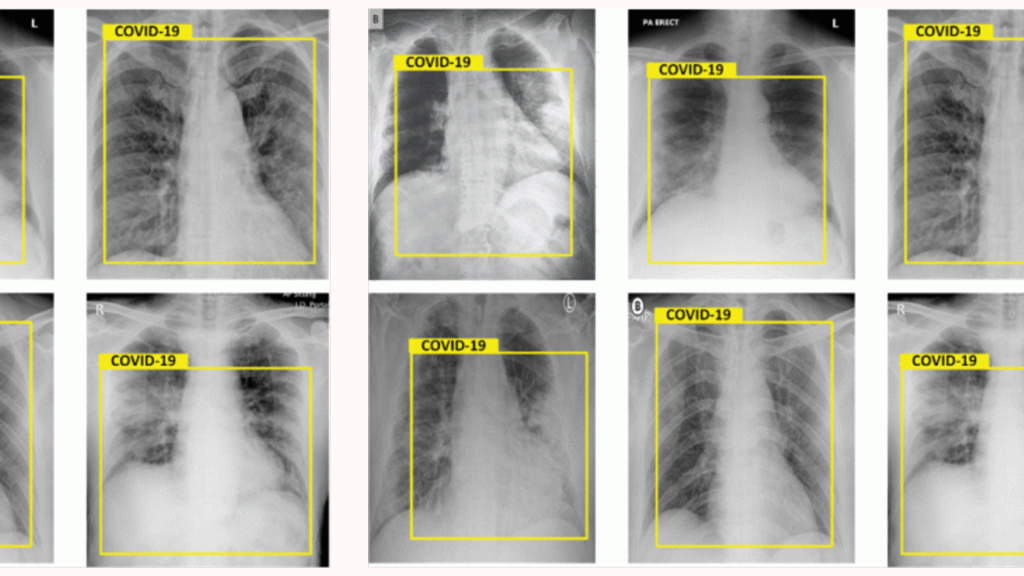
In a groundbreaking development, Northwestern Medicine researchers have introduced a generative artificial intelligence (AI) tool designed to interpret chest X-rays, demonstrating accuracy comparable to or surpassing that of radiologists in specific conditions. Published in JAMA Network Open, the study reveals how this AI model, trained on a vast dataset, aims to streamline emergency department workflows, providing valuable insights and guidance when immediate radiologist support is unavailable. This transformative technology not only enhances efficiency but also holds promise for addressing workforce shortages in medical imaging clinics.
Revolutionizing Chest X-Ray Interpretation:
- AI Model Development:
- The AI model was trained on 900,000 chest X-rays and radiologist reports to generate text reports mirroring human radiologists’ language and style.
- Focused on improving clinical workflows, the AI aims to complement physician expertise by automating the interpretation process.
- Real-world Testing:
- The model underwent testing on 500 chest X-rays from an emergency department at Northwestern Medicine, with results compared to interpretations by on-site radiologists and teleradiologists.
- Notably, the study aimed to assess the AI’s performance in emergency settings where immediate radiologist consultation might be lacking.
- Clinical Validation:
- Five board-certified emergency medicine physicians evaluated the AI-generated reports, revealing no significant difference in accuracy compared to human-generated reports across various pathologies, including life-threatening conditions like pneumonia.
- Sensitivity and specificity for abnormality detection were impressive, with the AI demonstrating 84% and 98%, respectively.
AI’s Potential Impact:
- Enhancing Emergency Department Care:
- The study expedite decision-making in critical scenarios positions it as a valuable tool for emergency physihighlighted the AI’s ability to effectively identify concerning clinical findings, providing reliable imaging reports in emergency departments where on-site radiologists may not be readily available.
- The AI’s potential tocians.
- Versatility and Future Applications:
- Unlike many existing AI tools with specific purposes, this generative model provides comprehensive diagnoses, showcasing its versatility.
- The research team envisions expanding the model’s capabilities to interpret MRIs, ultrasounds, and CAT scans, broadening its applicability in diverse clinical settings.
- Addressing Workforce Shortages:
- As medical imaging faces workforce shortages, the AI tool emerges as a potential solution, serving as a reliable assistant to radiologists and streamlining their workload.
- The tool’s capacity to match or exceed human performance in certain cases positions it as a promising ally in clinics experiencing resource constraints.
Future Endeavors and Industry Implications:
- Continued Development and Adoption:
- The research team plans to extend the model’s capabilities to read various medical imaging modalities beyond X-rays.
- A small pilot study assessing real-time utilization by radiologists signals ongoing efforts to integrate this technology into daily clinical practice.
- Broader Industry Trends:
- The success of this generative AI model marks a departure from single-purpose AI tools in radiology, presenting a comprehensive solution for image interpretation.
- Similar endeavors in the industry indicate a trend towards leveraging AI to enhance diagnostic accuracy and streamline healthcare workflows.
Northwestern Medicine’s generative AI tool for chest X-ray interpretation represents a paradigm shift in medical imaging, holding the potential to redefine diagnostic processes. As AI continues to evolve as a radiologist’s ally, this transformative technology not only ensures efficiency in emergency scenarios but also charts a course for addressing broader challenges in the medical imaging landscape. The integration of generative AI models opens new frontiers in healthcare, promising a future where technology seamlessly complements human expertise to deliver enhanced patient care.