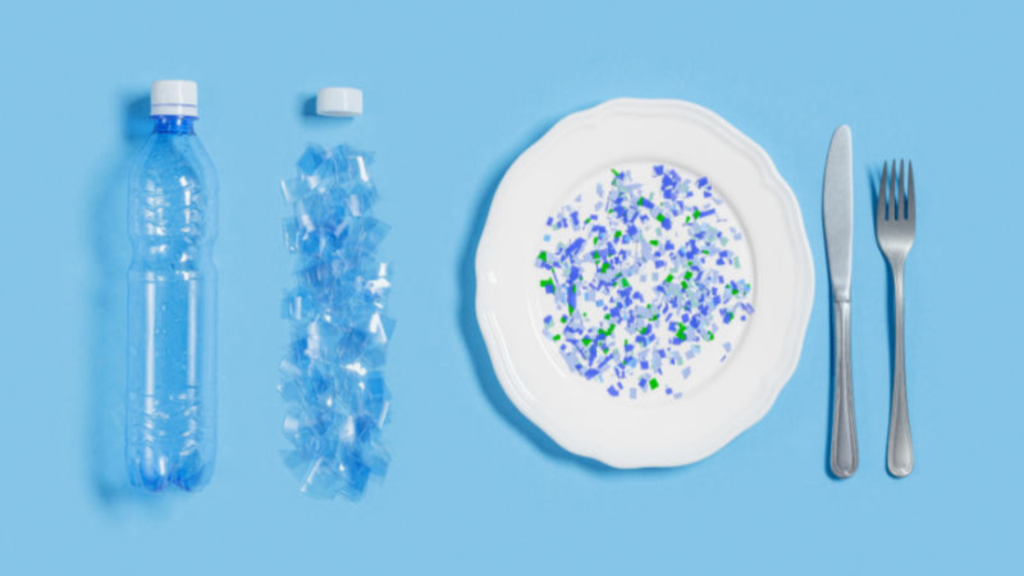
New Method for Nanoplastic Detection
Research Findings:
- Innovative hyperspectral stimulated Raman scattering (SRS) microscopy reveals 10 to 100 times more nanoplastics in bottled water than previously known.
- Three popular bottled water brands were tested, exposing 110,000 to 370,000 nanoparticles, primarily nanoplastics.
Health Implications:
- Ingested nanoplastics pose complex health risks, potentially causing physical injury and acting as chemical hazards.
- Additives like phthalates and BPA, found in nanoplastics, can lead to adverse effects on development, reproduction, and more.
Long-Term Concerns:
- The non-biodegradable nature of plastics raises concerns about the persistence of ingested nanoparticles in the body.
Microplastics in Food: Consumer Reports’ Insights
Widespread Microplastic Presence:
- Consumer Reports discovers microplastics in 84 out of 85 foods, highlighting a pervasive infiltration into the human food chain.
- Phthalates, concerning chemicals, are found in almost every food, raising potential health issues.
No Specific Food Pattern:
- No consistent pattern was observed regarding higher phthalate levels in specific types of food or packaging.
- Polar raspberry lime seltzer was identified as the only food with no phthalates.
BPA Levels:
- Substantial amounts of BPA were found, mostly at lower levels compared to a 2009 study by Consumer Reports.
Mitigating Risks and Recommendations
Awareness and Action:
- Increased awareness and avoidance of highly processed foods are advised.
- Switching from disposable plastic bottles to metal or glass containers is recommended.
Reducing Plastic Use:
- Opting for loose-leaf tea, using tap water with effective filters, and choosing glass containers over plastic for microwaving can reduce plastic exposure.
Balancing Hydration:
- Despite findings, staying hydrated remains crucial, and the study suggests not avoiding bottled water when necessary.
The unseen threat of microplastics in bottled water and food necessitates increased awareness and proactive measures. Understanding the potential health risks and adopting strategies to reduce plastic exposure become crucial for individual and collective well-being. Ongoing research and informed consumer choices play a pivotal role in addressing this pervasive health concern.