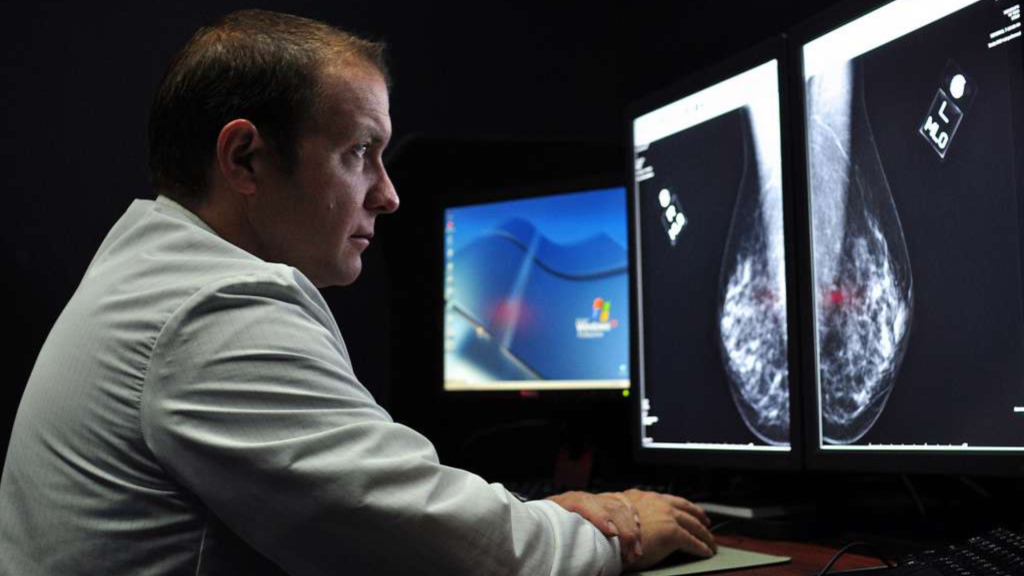
Breast cancer’s formidable impact on women globally necessitates innovative diagnostic approaches. A groundbreaking study from Northwestern University unveils an artificial intelligence (AI) tool poised to transform breast cancer prognosis, potentially sparing patients from unnecessary chemotherapy. This comprehensive analysis delves into the research’s intricacies, implications, and the broader landscape of AI in cancer prediction.
Research Breakthrough:
AI for Prognosis:
Northwestern University researchers introduce an AI model assessing digital images of breast tissue to predict cancer progression.
Targeting the challenge of categorizing intricate cell patterns, the model evaluates cancerous and non-cancerous cells, enhancing diagnostic precision.
Complex Evaluation Parameters:
The AI tool scrutinizes 26 properties within each patient’s breast tissue, generating an encompassing prognostic score.
Individual scores for cancer, immune, and stromal cells provide nuanced insights, facilitating personalized treatment strategies.
Clinical Significance:
Treatment Personalization:
AI-derived insights empower pathologists to comprehend cancer patterns comprehensively, potentially minimizing unnecessary chemotherapy.
Personalized treatment plans tailored to individual prognostic scores enhance precision in breast cancer care.
Improving Risk Assessments:
The AI model promises heightened accuracy in risk assessments for individual cases, offering clinicians a robust tool for treatment evaluation.
Dynamic adjustments to treatment duration or intensity, especially in chemotherapy, are facilitated based on real-time patient responses.
Addressing Disparities:
The tool’s potential extends to community settings, where specialized pathologists may be scarce, potentially reducing diagnostic disparities.
AI aids generalist pathologists in evaluating breast cancers, democratizing access to advanced diagnostic capabilities.
Future Directions:
Prospective Validation:
The research team aims to prospectively validate the AI model for clinical use, emphasizing real-world applicability.
Ongoing efforts include expanding the model’s scope to encompass other invasive breast cancers, catering to the diverse landscape of tissue patterns.
Enhancing Predictive Capabilities:
The researchers aspire to refine AI models for specific breast cancer subtypes, such as triple-negative or HER2-positive, acknowledging the variability in tissue patterns.
Continuous improvements aim to fortify outcome predictions and deepen insights into the biology of diverse breast cancers.
Broader Landscape of AI in Cancer Prediction:
Epigenetic Factors in Prediction:
Recent research from UCLA Health showcases AI’s prowess in predicting cancer survival outcomes by assessing epigenetic factors.
Gene expression patterns of epigenetic factors, inputted into an AI model, surpassed traditional metrics in predicting cancer outcomes.
Northwestern University’s AI breakthrough marks a pivotal stride in breast cancer management. The prospect of tailoring treatments based on nuanced AI predictions heralds a new era of precision medicine. As AI continues to reshape cancer prognostication, the collaborative efforts of researchers propel the medical community toward more effective, personalized, and equitable breast cancer care.