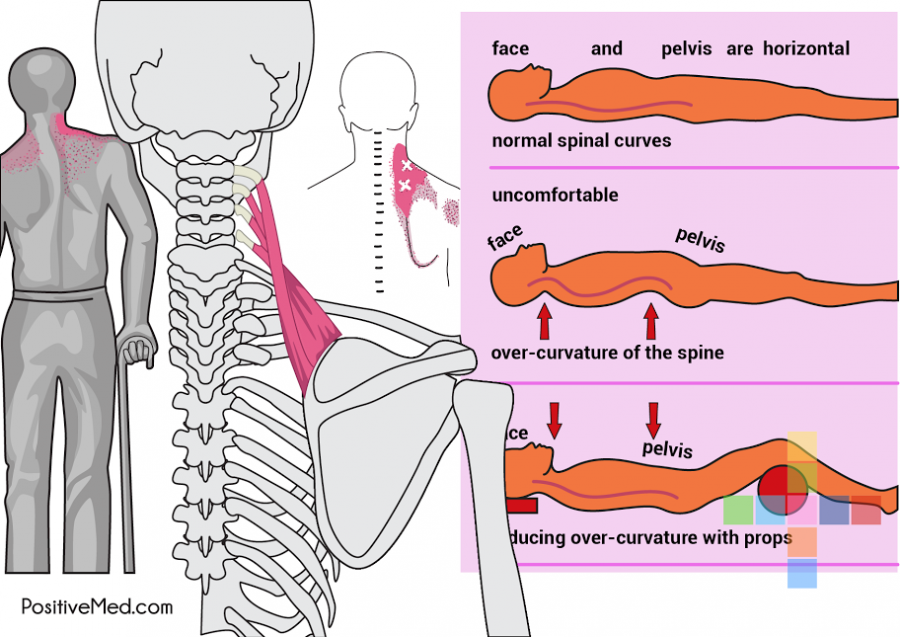
Ouch! A stiff neck can really ruin your day. Neck pain like this is characterized by having a difficult time moving your head from side to side without pain. A stiff neck might also come accompanied by shoulder pain, arm pain, and a headache. A stiff neck is usually caused by a soft tissue sprain, often to the levator scapula muscle. Sleeping awkwardly for long periods, sports injuries, stress, and poor posture often cause this malady. Surprisingly enough, one of the best ways to alleviate this pain involves a rolled-up towel! Physical therapists often use rolled-up towels to properly soothe hurt muscles, using the body’s own weight as a way to perform a gentle stretch.
RELATED ARTICLE: 3 Home Remedies For Muscle Spasms In The Neck
In this video from the care4body YouTube channel, we can observe the proper placement of a towel under the shoulder on the side of the affected area and the proper placement of the arm above the head. Notice how happy the young woman is when her pain is gone within ten seconds, and be sure to try this gentle technique at home!