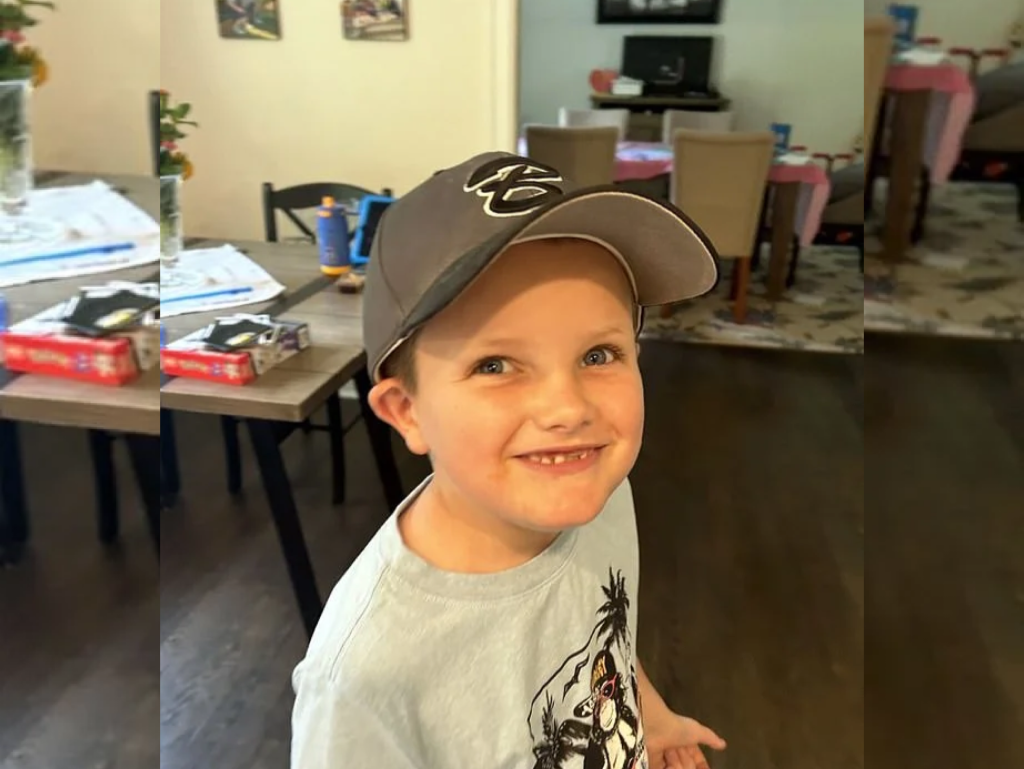
In the midst of the COVID-19 pandemic, millions of families faced challenges and uncertainties. For one family, the lockdown brought a puzzling and distressing ordeal that would span three long years. This is the story of Alex, a young boy who saw 17 doctors for chronic pain but found answers in an unexpected place – artificial intelligence (AI).
The Mysterious Pain Begins
During the early days of the pandemic, Courtney, a concerned mother, purchased a bounce house to keep her two children entertained at home. Little did she know that this seemingly innocent decision would set off a chain of events that would leave her son, Alex, in chronic pain.
Soon after the bounce house arrived, four-year-old Alex began experiencing inexplicable pain. The first signs were subtle but concerning. He became increasingly irritable and would have meltdowns, which were only alleviated by giving him Motrin. Courtney initially attributed it to teething as Alex had started chewing on things.
The Long and Frustrating Search for Answers
The journey to discover the cause of Alex’s pain was arduous and took a toll on the family. Alex’s symptoms grew worse, and he began exhibiting unusual behaviors. Courtney sought help from multiple healthcare professionals, taking her son to 17 different doctors over the course of three years.
The initial misdiagnoses ranged from cavities to migraines, and even sleep problems related to sinus cavities or airways. With each medical consultation, Courtney’s frustration grew. As she recalls, “We saw so many doctors. We ended up in the ER at one point. I kept pushing.”
An Unlikely Ally: ChatGPT
As conventional medical avenues seemed to lead to dead ends, Courtney turned to an unconventional source for help – ChatGPT, an artificial intelligence platform. She created an account and input all the information she had gathered about Alex’s symptoms, including data from his MRI scans.
ChatGPT suggested a diagnosis: tethered cord syndrome. Courtney was intrigued, and this time, the pieces seemed to fit. She had done extensive research and carefully analyzed her son’s MRI notes. She had noticed details, such as Alex’s inability to sit “crisscross applesauce,” that hinted at a structural issue.
The Diagnosis: Tethered Cord Syndrome
Armed with this newfound knowledge, Courtney delved deeper into tethered cord syndrome. She joined a Facebook group for families facing similar challenges and suspected that Alex’s symptoms mirrored those of others with the condition.
When she consulted a new neurosurgeon and shared her suspicions, the doctor confirmed the diagnosis. Alex had tethered cord syndrome, a condition where the spinal cord is abnormally restricted in its movement. In Alex’s case, it was considered “hidden” spina bifida occulta, with no visible opening in his back.
The Surgery and Road to Recovery
Alex’s diagnosis marked the beginning of his journey to recovery. He underwent surgery to release the tethered cord and alleviate the tension in his spinal cord. While he is still in the process of recovery, his family is hopeful that he will soon return to his active, cheerful self.
The Role of AI in Healthcare
Courtney’s use of ChatGPT highlights the evolving role of artificial intelligence in healthcare. While AI cannot replace medical professionals, it can assist in suggesting potential diagnoses based on the information provided. ChatGPT’s ability to generate relevant medical information demonstrates its potential as a valuable tool for both patients and physicians in navigating complex medical cases.
Alex’s story serves as a testament to the resilience of families facing medical mysteries and the potential of AI to offer insights into challenging situations. As technology continues to advance, AI may play an increasingly important role in healthcare, aiding in the quest for accurate diagnoses and improved patient outcomes. Courtney’s determination to be her child’s advocate ultimately led to answers, offering hope to others navigating similar journeys of medical uncertainty.